
Painters Don’t Always Tell You This: The Real Cost to Paint Interior Walls in Massachusetts
If you’re planning to freshen up your home, one of the first questions you’ll probably ask is, “What is the real interior painting cost in Massachusetts?” The answer isn’t always straightforward, and that’s something many homeowners discover after requesting multiple estimates.
As an experienced painting contractor, I’ve seen everything from quick one-room makeovers to full-home interior painting projects. One thing is consistent: no two jobs are exactly alike. The final price depends on much more than the size of your walls.
In this guide, I’ll explain what goes into a professional painting estimate, the hidden costs many homeowners don’t expect, and how to make sure you’re getting the best value—not just the lowest price.
What Does Interior Painting Cost in Massachusetts?
The interior painting cost in Massachusetts can vary depending on your home’s size, condition, and the quality of materials used. While every project is unique, these are common price ranges homeowners can expect.
Average Cost Per Room
Here are typical ranges for professionally painting walls in an average home:
- Small bedroom: $400–$800
- Standard bedroom: $600–$1,000
- Living room: $800–$1,500
- Dining room: $500–$900
- Hallway: $300–$700
- Home office: $400–$800
If you’re also painting ceilings, trim, doors, or closets, the total cost will increase.
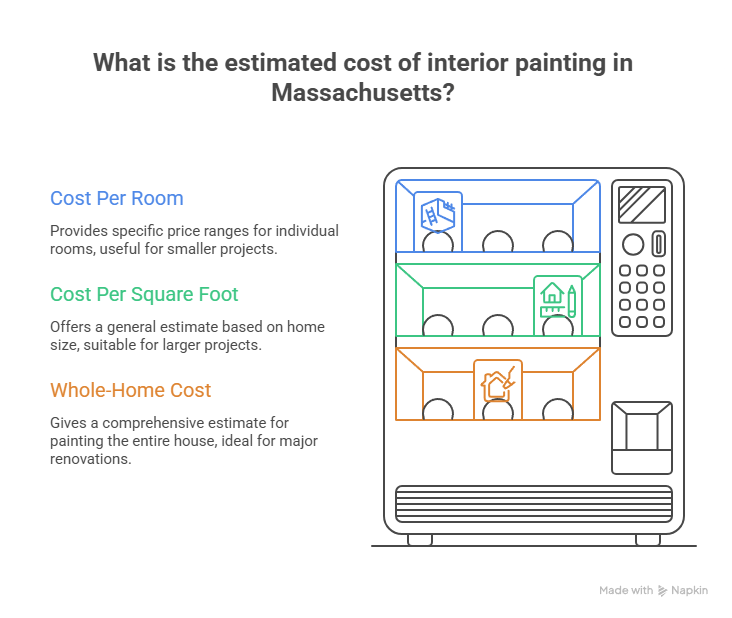
Average Cost Per Square Foot
Many painting contractors estimate projects using square footage.
Typical pricing ranges from:
- $2 to $6 per square foot for standard interior wall painting.
- Higher-end finishes, detailed prep work, or premium paints can increase costs.
This estimate usually includes labor, surface preparation, paint application, and cleanup.
Whole-Home Interior Painting Costs
For homeowners planning a larger project, average pricing may look like this:
- 1,000 sq. ft. home: $2,500–$5,000
- 1,500 sq. ft. home: $3,500–$6,500
- 2,000 sq. ft. home: $4,500–$8,000
- 2,500+ sq. ft. home: $6,000–$10,000+
Older homes or homes with damaged drywall often require additional preparation, which can affect the final estimate.
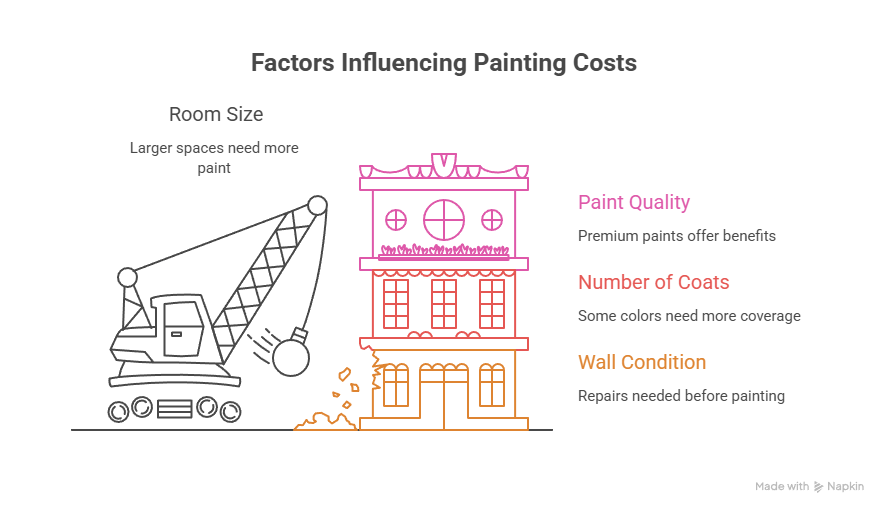
What Actually Determines the Price?
Many homeowners assume painting costs are based only on room size, but experienced contractors evaluate several important factors.
Size of the Space
Larger rooms naturally require more paint and labor. High ceilings, open floor plans, staircases, and vaulted spaces also take more time to complete safely and properly.
Wall Condition
Fresh paint can only look as good as the surface underneath it.
Professional painters inspect for:
- Nail holes
- Cracks
- Dents
- Water stains
- Drywall damage
- Peeling paint
Repairing these issues before painting creates a smoother, longer-lasting finish.
Number of Coats
Some colors require more coverage than others.
For example:
- Dark gray to white
- Navy blue to beige
- Bright red accent walls
- Fresh drywall
These situations often require primer plus two finish coats to achieve an even appearance.
Paint Quality
Not all paint performs the same.
Premium paints generally offer:
- Better coverage
- Improved durability
- Easier cleaning
- Longer-lasting color
- Better stain resistance
While higher-quality paint costs more upfront, it often reduces maintenance and repainting costs over time.
Hidden Costs Many Painting Contractors Don’t Mention
Not every estimate includes the same services. Before signing a contract, make sure you understand what’s covered.
Furniture Moving
Some companies include moving furniture, while others expect homeowners to handle it beforehand.
Surface Preparation
Preparation often takes longer than painting itself.
This may include:
- Sanding
- Filling holes
- Caulking gaps
- Cleaning walls
- Spot priming
- Removing loose paint
Skipping prep work usually leads to poor results.
Wallpaper Removal
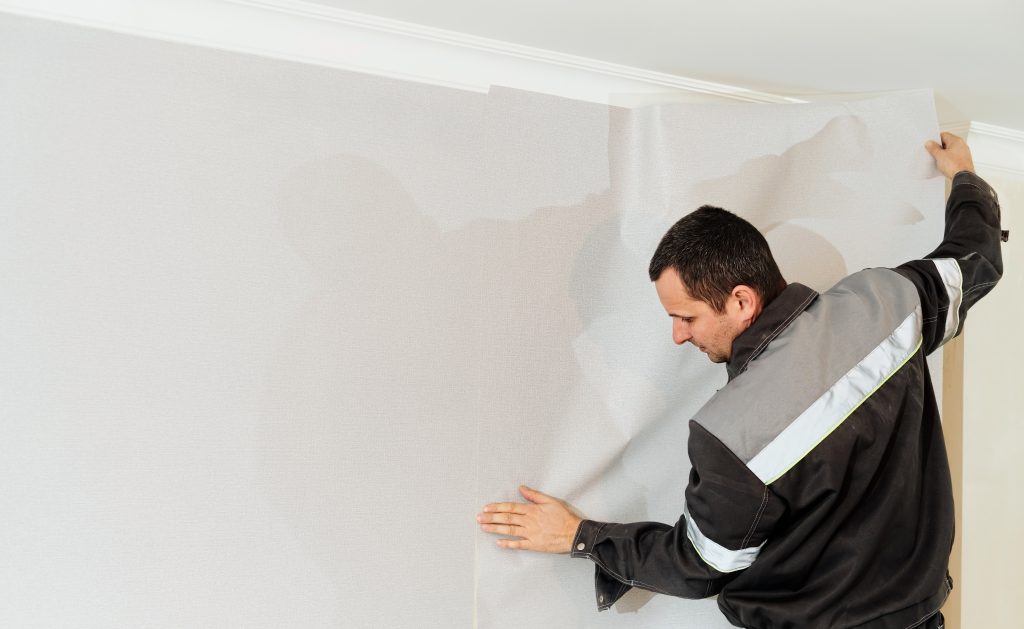
Removing wallpaper is labor-intensive and can uncover damaged drywall that needs repair before painting begins.
Trim, Baseboards, and Doors
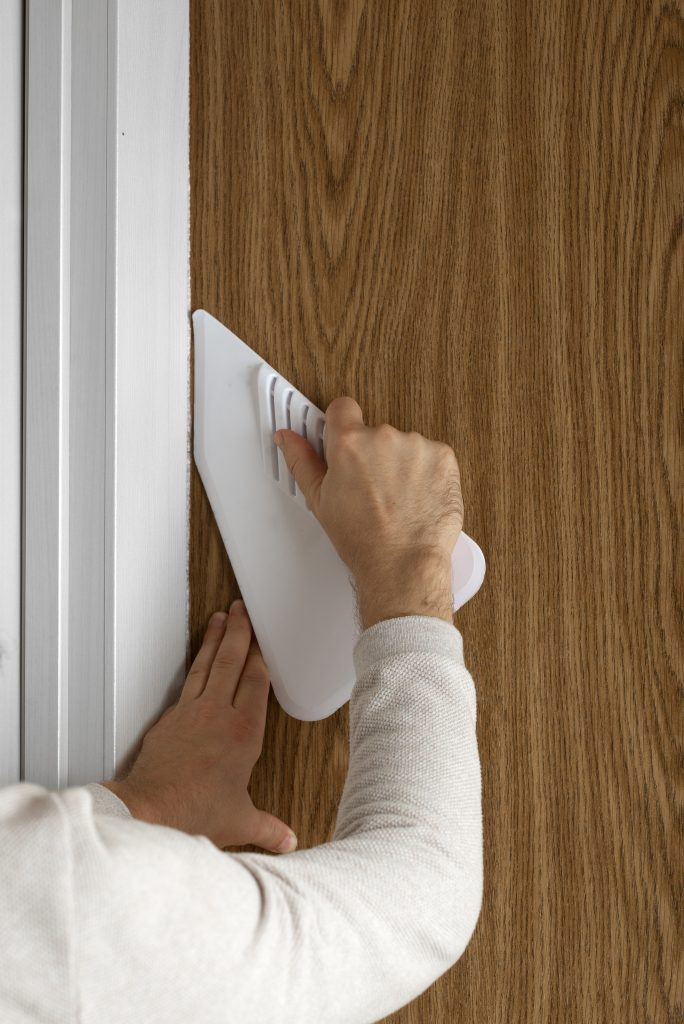
Painting walls alone is different from painting:
- Crown molding
- Window trim
- Baseboards
- Interior doors
- Door frames
These details require precision and add labor time.
Accent Walls
Bold accent colors often require additional coats and careful masking, increasing labor costs.
Is DIY Really Cheaper?
Many homeowners consider painting themselves to save money.
While DIY can reduce labor costs, there are other expenses to consider.
Materials
You’ll likely need:
- Paint
- Primer
- Rollers
- Brushes
- Painter’s tape
- Drop cloths
- Extension poles
- Ladders
- Sandpaper
- Patch compound
These costs add up quickly.
Time
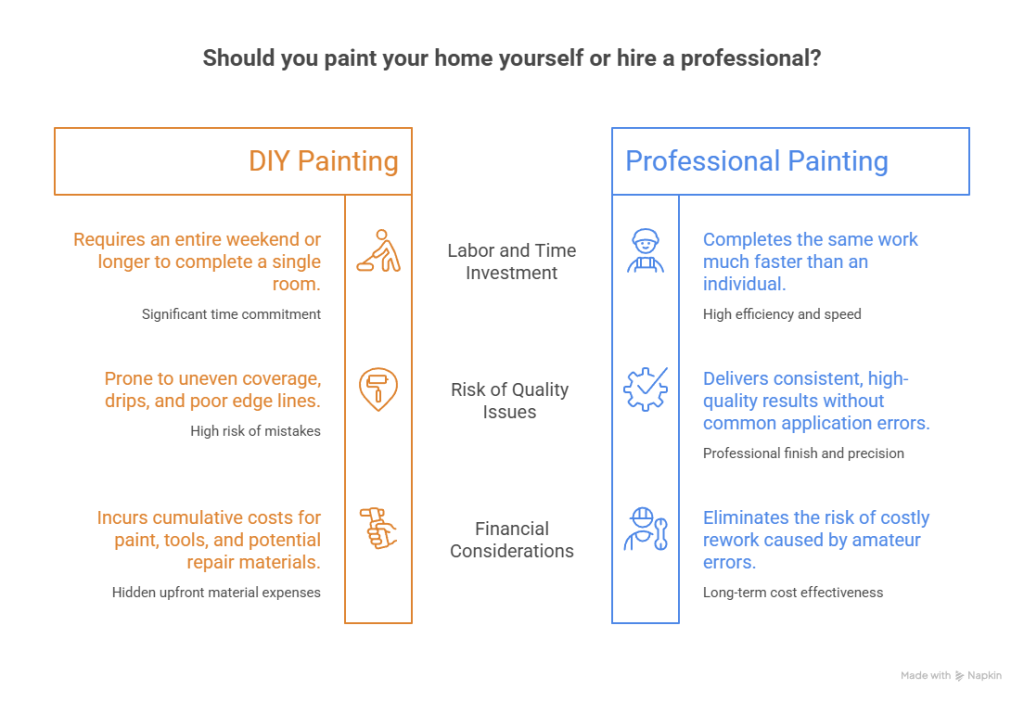
Painting one room properly often takes an entire weekend—or longer if repairs are needed.
Professional crews can usually complete the same work much faster.
Common DIY Mistakes
Some of the most common issues include:
- Uneven coverage
- Roller marks
- Paint drips
- Poor edge lines
- Inadequate surface preparation
- Incorrect paint selection
Fixing these mistakes can cost more than hiring a professional from the start.
How Professional Painters Create Accurate Estimates

When providing a painting estimate in Massachusetts, experienced contractors evaluate much more than square footage.
They consider:
- Wall measurements
- Ceiling height
- Existing paint condition
- Drywall repairs
- Number of colors
- Paint type
- Accessibility
- Trim work
- Cleanup requirements
- Estimated labor hours
This is why two homes with similar sizes can receive very different quotes.
Questions to Ask Before Hiring a Painter

Before accepting an estimate, ask these questions:
- Is surface preparation included?
- Are materials included in the quote?
- What paint brand will be used?
- How many coats are included?
- Is cleanup included?
- Are your painters insured?
- Is there a workmanship warranty?
- Will the project be completed by employees or subcontractors?
Clear answers help avoid surprises later.
How to Save Money Without Sacrificing Quality
Hiring a professional painter doesn’t have to break your budget.
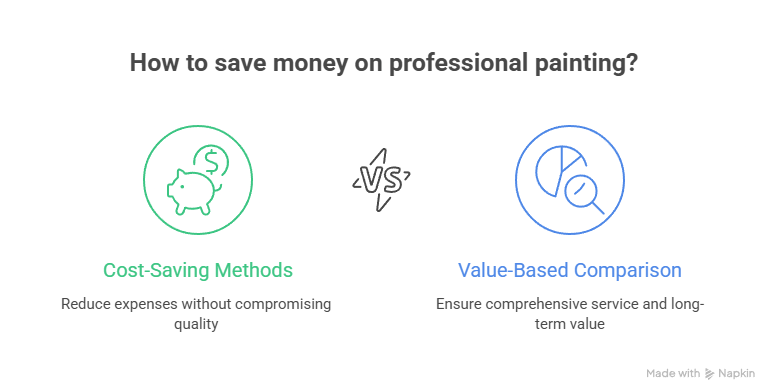
Here are a few smart ways to reduce costs.
Paint Multiple Rooms Together
Bundling several rooms into one project lowers setup time and often results in better pricing.
Schedule During Slower Seasons
Many painting contractors offer more flexible scheduling and competitive pricing during less busy months.
Handle Minor Preparation Yourself
Removing pictures, decorations, and small furniture before the crew arrives can save time.
Compare Detailed Estimates
Don’t compare estimates based only on price.
Look at what’s included, including:
- Prep work
- Paint quality
- Number of coats
- Warranty
- Cleanup
A slightly higher quote may provide significantly better value.
Why Painting Costs Are Higher in Massachusetts

Massachusetts homeowners often pay more than the national average due to several factors.
These include:
- Higher labor costs
- Older homes requiring more repairs
- Historic properties with unique details
- Seasonal demand
- Premium building materials
- Insurance and licensing expenses
Experienced contractors also invest in skilled painters and professional equipment, helping ensure lasting results.
Signs You’re Receiving a Fair Quote
A professional painting estimate should clearly outline:

- Labor costs
- Materials
- Paint brand
- Surface preparation
- Number of coats
- Timeline
- Cleanup
- Warranty information
- Payment schedule
If an estimate seems unusually low, ask what’s being left out.
Frequently Asked Questions
How much does it cost to paint one room in Massachusetts?
Most homeowners spend between $400 and $1,500, depending on room size, preparation, and paint quality.
What is the average interior painting cost per square foot?
Professional interior painting generally ranges from $2 to $6 per square foot, depending on project complexity.
Does the estimate usually include paint?
Many contractors include paint and materials, but it’s always best to confirm before signing a contract.
How long does interior painting take?
A single room may take one day, while a full-home interior painting project can take several days depending on size and preparation requirements.
Is premium paint worth the investment?
Yes. Premium paint often provides better coverage, improved durability, and a longer-lasting finish, making it a smart investment for most homes.
Should I move my furniture before painters arrive?
Ask your contractor. Some companies include furniture moving, while others request that homeowners prepare the space beforehand.
How often should interior walls be repainted?
Most interior walls benefit from repainting every 5 to 10 years, although high-traffic areas like kitchens, hallways, and children’s rooms may need fresh paint sooner.
Final Thoughts
Understanding the interior painting cost in Massachusetts helps you make smarter decisions and avoid unexpected expenses. Every home is different, and the best estimate is one that’s transparent about labor, preparation, materials, and the scope of work.
Instead of choosing the lowest bid, focus on hiring experienced professionals who use quality products, provide detailed estimates, and stand behind their workmanship. A well-executed paint job doesn’t just improve your home’s appearance—it also protects your investment for years to come.
Get a Free Interior Painting Estimate Today
Ready to transform your home with a fresh coat of paint? Our experienced team provides honest pricing, meticulous preparation, and high-quality finishes for homeowners throughout Massachusetts. Whether you’re updating a single room or repainting your entire home, we’re here to help.